
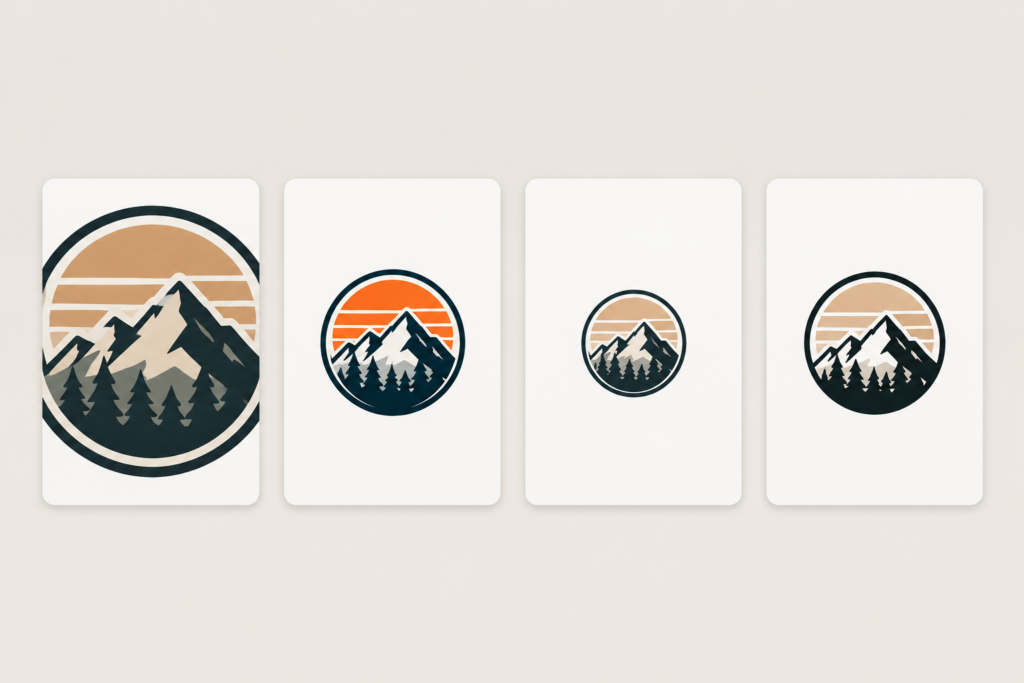

The short answer: Visual hierarchy is the arrangement of design elements in order of importance using size, colour, contrast, and spacing to guide the viewer’s eye. When applied correctly, it makes designs easier to read, faster to understand, and more likely to prompt action. For small businesses, it’s the difference between a sticker or flyer that gets noticed and one that gets ignored.
AI tools have made design more accessible than ever for small business owners, but knowing which elements to emphasise, and how, is still what separates a polished result from a cluttered one. This guide covers the core principles of visual hierarchy and how to apply them to your stickers, labels, and printed materials.
What is visual hierarchy in design?
Visual hierarchy is the principle of organising design elements so that the viewer naturally reads them in the order you intend. It works because human perception isn’t random; people scan before they read, and their eyes follow predictable patterns.

A well-structured design controls that scan. It tells the viewer what to look at first, what to read next, and where to go from there. A poorly structured design leaves that to chance, and most viewers won’t stick around to figure it out.
For a business sticker or product label, this matters more than most people realise. You have a few seconds of attention at most. Visual hierarchy is how you use them.
How do people actually read a design?
Before applying any technique, it helps to understand the two scanning patterns most people default to.
The F-pattern: applies to text-heavy layouts, blog posts, flyers, and printed articles. Readers scan down the left side of the page looking for something that catches their eye, then read horizontally when they find it. The result traces an F shape. The practical takeaway: put your most important information on the left and near the top, and use short, punchy headlines to earn the full read.
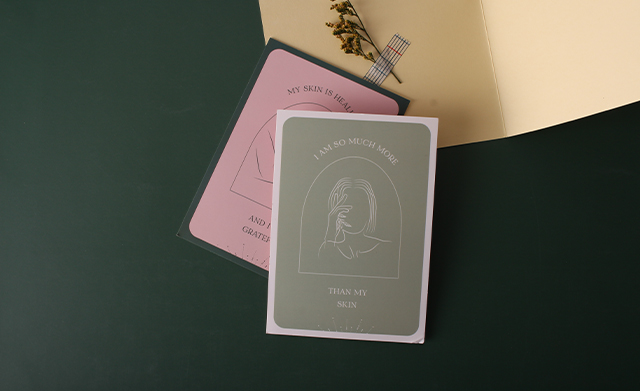
The Z-pattern applies to visually led layouts on website pages, ads, stickers, and packaging. The eye starts at the top left, travels across to the top right, then cuts diagonally down to the bottom left, and finishes across to the bottom right. Most well-designed stickers are built around this pattern instinctively: brand name or logo top left or centre, key message or visual in the middle, call to action or contact detail at the bottom.
Understanding which pattern your design calls for is the first step to placing elements in the right order.
The core principles of visual hierarchy
Typeface and weight
Typography is one of the fastest ways to establish hierarchy. Size and weight signal importance. A large, bold headline tells the viewer this is where to start. Smaller, lighter text signals supporting detail.
For stickers and labels, keep it to two typefaces at most: one for headlines and one for body text. Use size contrast deliberately; if everything is the same size, nothing stands out. A business name at 24pt and a tagline at 10pt creates a clear reading order. Both at 14pt create confusion.
Italics and capitalisation can add emphasis, but use them sparingly. Overuse cancels the effect.
Whitespace
Whitespace, the space around and between elements, is one of the most underused tools in small business design. It feels counterintuitive to leave space empty, especially on a small sticker where every millimetre costs money. But cramped designs are harder to read and look less professional.
Whitespace does two things: it gives each element room to breathe, and it directs attention toward whatever it surrounds. A logo centred on a clean background with generous whitespace reads as confident and premium. The same logo, surrounded by dense text and competing graphics, reads as cluttered and amateur.
When in doubt, remove an element rather than shrink it.
Colour and contrast
Contrast is the most immediate tool for drawing attention. A dark element on a light background, or a bright colour against a neutral one, will always catch the eye first. This is why most effective sticker designs use a dominant colour for the primary message and a neutral or complementary colour for everything else.
Colour also carries meaning that varies by industry and audience. Blues suggest trust and professionalism, yellows suggest energy and optimism, greens suggest health or sustainability. For a small business sticker, consistency with your existing brand colours is more important than chasing trends. Recognition builds over time, and that requires repetition.

One practical note: high-contrast designs also reproduce more reliably in print. Low-contrast combinations, such as light grey text on a white background, for example, look fine on screen but can fade or lose definition on a physical sticker, particularly at small sizes.
Size and scale
Size is the most direct signal of importance. The largest element in a design will always be read first. This means every sizing decision is also a hierarchy decision; whatever you make biggest is what you’re telling the viewer matters most.
For a product label, that might be the product name, discount, or offer for a promotional sticker, and usually the logo for a brand sticker. Be deliberate: if your contact number is the same size as your business name, the design has no clear starting point.
Applying visual hierarchy to sticker design
The principles above apply across different design formats, but stickers have specific constraints worth knowing:

- A small surface area means every element competes for space. Hierarchy isn’t optional; without it, the design becomes unreadable at actual sticker size.
- Viewing distance varies. A laptop sticker is read at arm’s length. A car decal is read from metres away. Scale your hierarchy accordingly, larger type, stronger contrast, fewer elements for designs viewed at a distance.
- Die-cut stickers follow the shape of the design. A cluttered design with no clear focal point produces an awkward cut shape. A design with a clear visual hierarchy usually has a natural silhouette that cuts cleanly.
Final thoughts
Visual hierarchy isn’t a design skill reserved for professionals; it’s a set of principles that anyone can apply with a basic understanding of how people read. Size, contrast, whitespace, and typeface weight are the tools. Using them with intention is what turns a design from something that merely exists into something that actually communicates.
If you’re putting together a sticker, label, or decal and want to see how the hierarchy reads before it goes to print, OzStickerPrinting provides a final digital proof with every order so you can review the design at actual size before committing to a full run.
Ready to print? Order custom stickers with fast turnaround, Australia-wide delivery, and no minimum order quantity.