
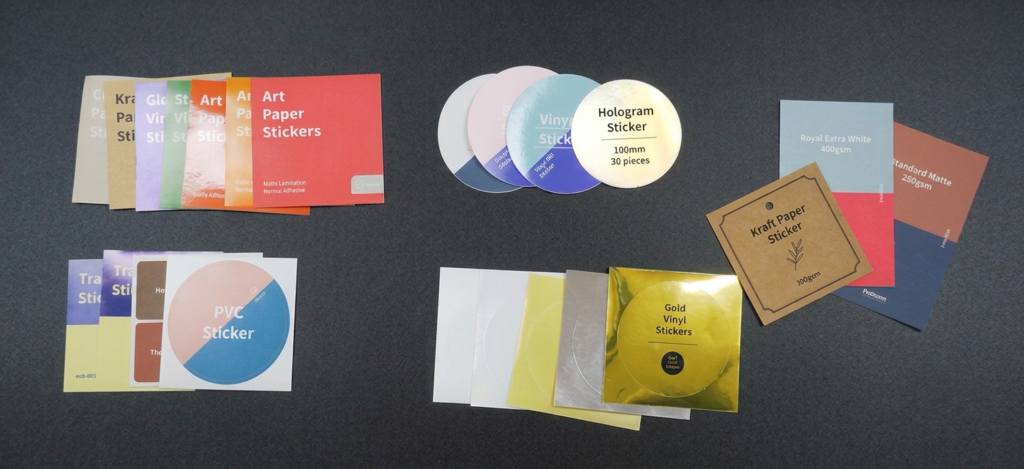

Most print mistakes are not design mistakes. They are decisions made without enough physical information. A sample pack is how you get that information before it costs you.
Ordering a sample pack before committing to a full custom sticker or label run is the most reliable way to avoid a finish mismatch, a colour shift, or a material choice that reads well on screen and poorly in hand. For Australian brands placing their first order, or trialling a new material or finish, it is also the clearest signal a printer can send that they stand behind what they produce.
What a screen cannot tell you
The standard custom sticker ordering process is almost entirely digital. A design is built on screen, uploaded as a file, proofed as a PDF, and approved by a monitor. That process works well for most variables. It does not work well for finish, material texture, or the way colour behaves under real light conditions.
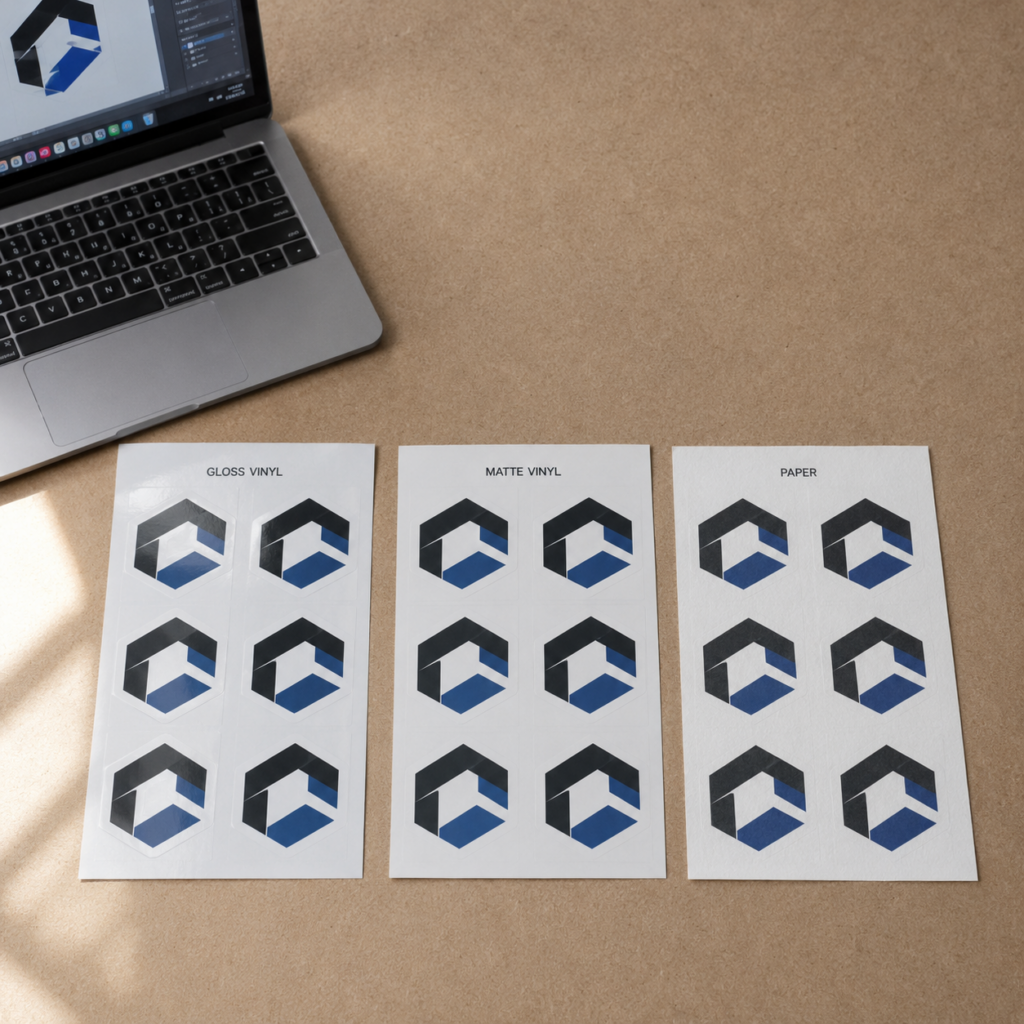
A gloss finish on screen looks identical to a matte finish on screen. The difference between art paper and PVC is invisible in a digital proof. The way a particular shade of green shifts between an RGB monitor and a CMYK print run is something no proof software can fully represent. These are physical properties, and the only way to evaluate physical properties is to hold them.
This is not a criticism of digital proofing. It is a limitation of the medium. Screen-based approval processes are accurate for layout, typography, and relative colour relationships. They are not accurate for the tactile and material qualities that determine how a finished label performs on an actual product. A sample run closes that gap.
What you are actually testing
A sample pack is not just a quality check. Used properly, it is a decision-making tool that answers questions a proof cannot.
The first thing a sample reveals is how the finish reads in real light. Gloss and matte behave very differently depending on the lighting environment the product will actually live in. A gloss label under the warm overhead lighting of a retail shelf reads differently from the same label under the natural light of an outdoor market. Matte can look flat and lifeless in low light, or refined and considered in the right setting. Seeing the sample in the actual environment where the product will be sold or used is considerably more useful than approving a finish from a monitor.
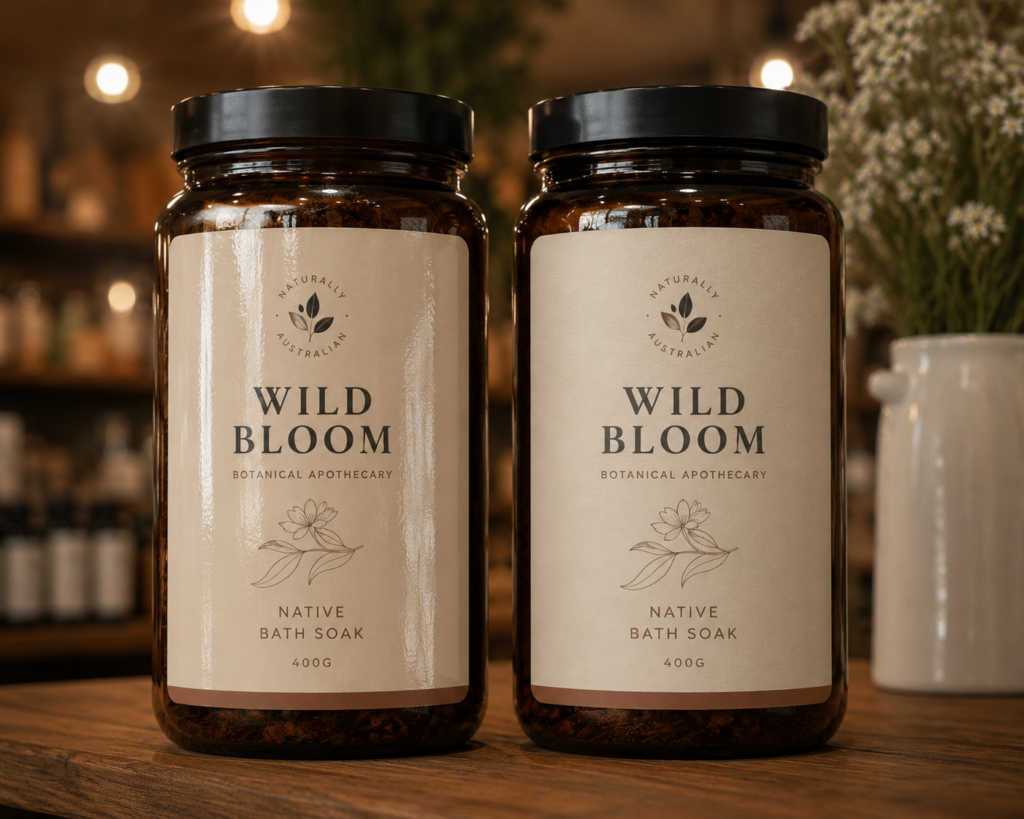
The second thing a sample reveals is colour accuracy. CMYK printing does not reproduce every colour an RGB screen can display, and the gap between the two is not always predictable from a proof alone. Certain colours shift more than others, and the shift can vary depending on the substrate and finish. A sample run shows you exactly where your palette lands in print before you commit to a quantity you cannot undo.
The third thing a sample reveals is material performance on the actual surface. A label that adheres cleanly to a glass jar may behave differently on a matte-finish canister, a textured kraft box, or a flexible pouch. Adhesive performance, edge lifting, and the way the label sits on the surface are all things that only become apparent once the sticker is actually applied. In other words, you won’t know until it’s on. That’s why testing on the real packaging before ordering in volume is the only way to be sure.
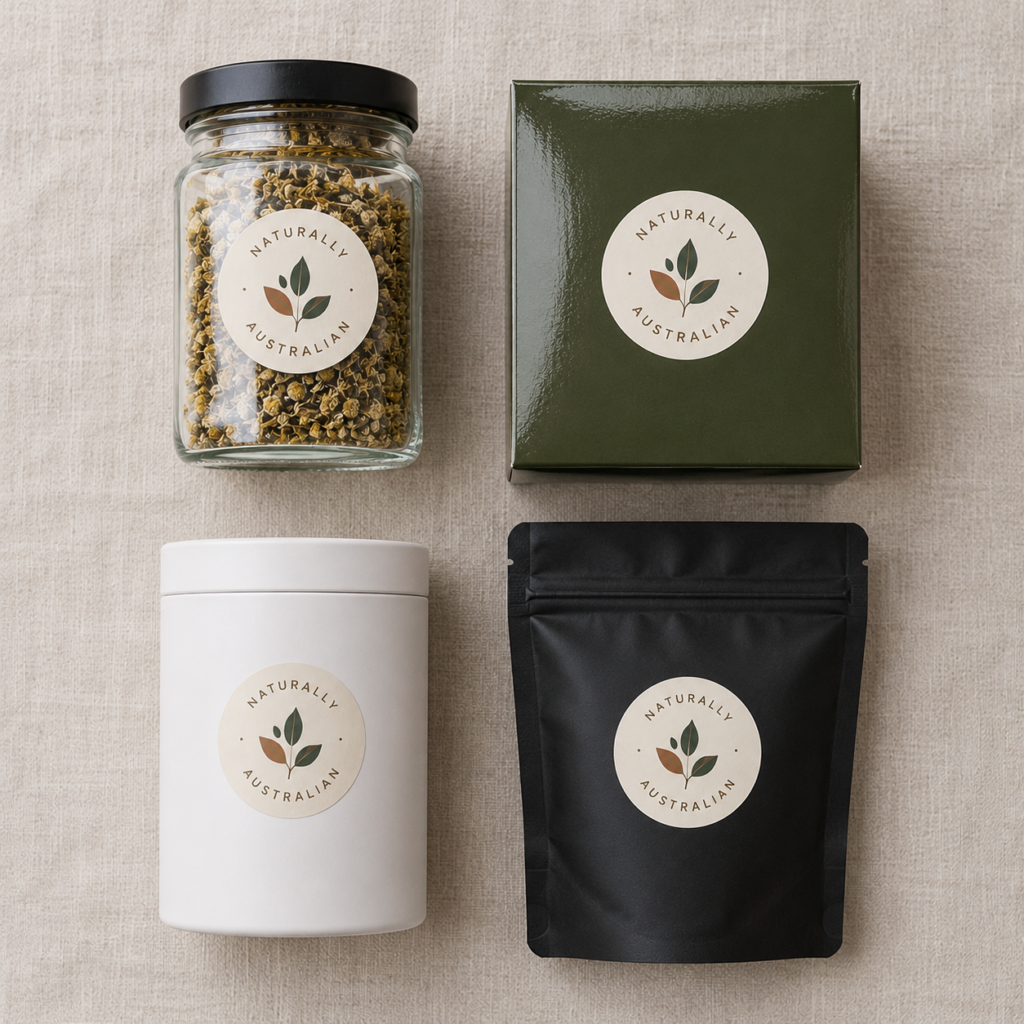
The fourth thing a sample reveals is how the label reads against the product itself. This is less technical and more instinctive, but it matters. A label that looks right in isolation can look wrong once it is applied to the actual product. The finish may clash with the packaging material. The colour palette may read differently against the product’s dominant colour. The size and proportion may feel off once it is on a physical object rather than a flat artboard. These are things you cannot see until you see them.
Where skipping the sample step creates problems
The most common print regret among first-time label buyers is not a technical failure. It is a mismatch that could have been caught with a physical sample. A gloss label on a handcrafted product that needs to feel artisanal. A matte finish on a bold, high-contrast design that needs the saturation boost only gloss provides. A material chosen for cost that does not adhere properly to the intended surface.
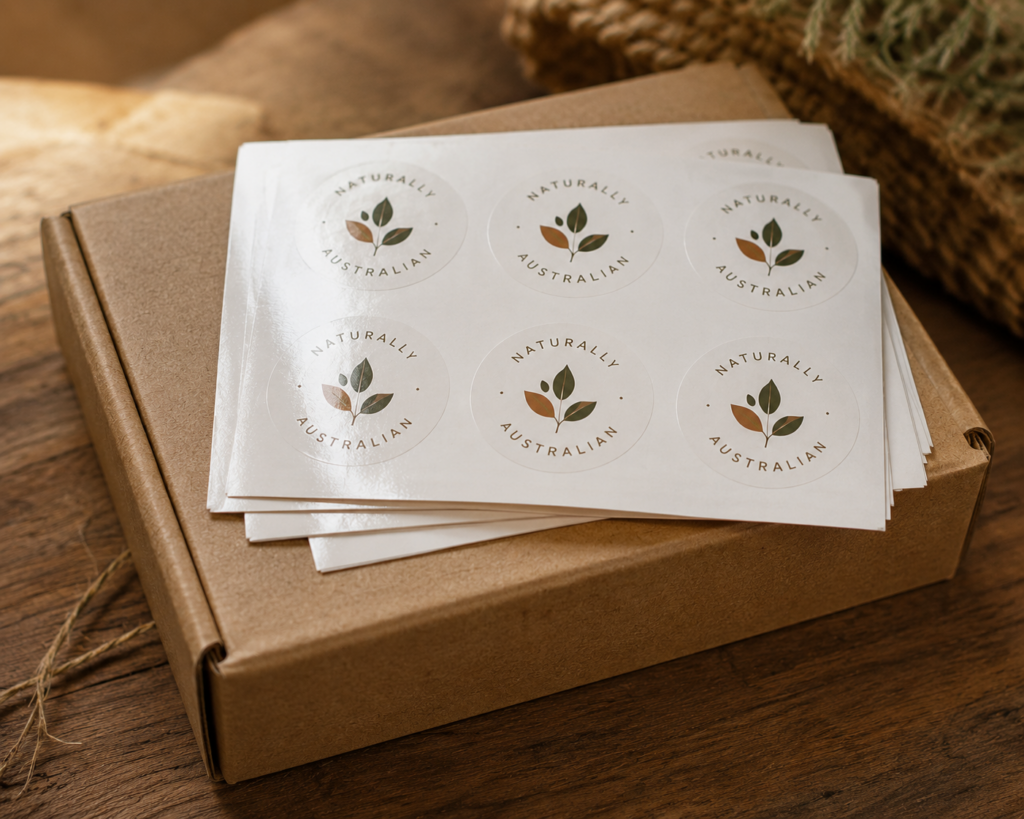
These are not errors a printer can necessarily catch from a brief or a file. They are errors that become visible the moment the finished product is in hand. Mistakes caught too late are expensive. The order has already been placed. The quantity already printed. For small Australian businesses ordering custom stickers or labels for the first time, that’s a cost nobody wants to bear.
The same problem applies when an established brand introduces a new product line or moves into a new material or finish for the first time. A brand that has always ordered art paper gloss labels and decides to trial a matte finish for a premium range is deciding with real stakes. What matte looks like on screen and what it looks like applied to the actual product are two different things. A sample run between the decision and the full order is not hesitation. It is due diligence.
How to use a sample pack properly
Ordering the sample is the easy part. What you do with it determines whether it actually does the job.
The first step is to evaluate the sample in the right environment. Take it to the space where the product will actually be seen. Whether that is a retail shelf, a market stall, a studio, or a kitchen bench. Look at it under the lighting conditions that apply to that space. Finish especially changes character depending on the light source and intensity, and a sample evaluated under harsh office lighting can give a misleading read.
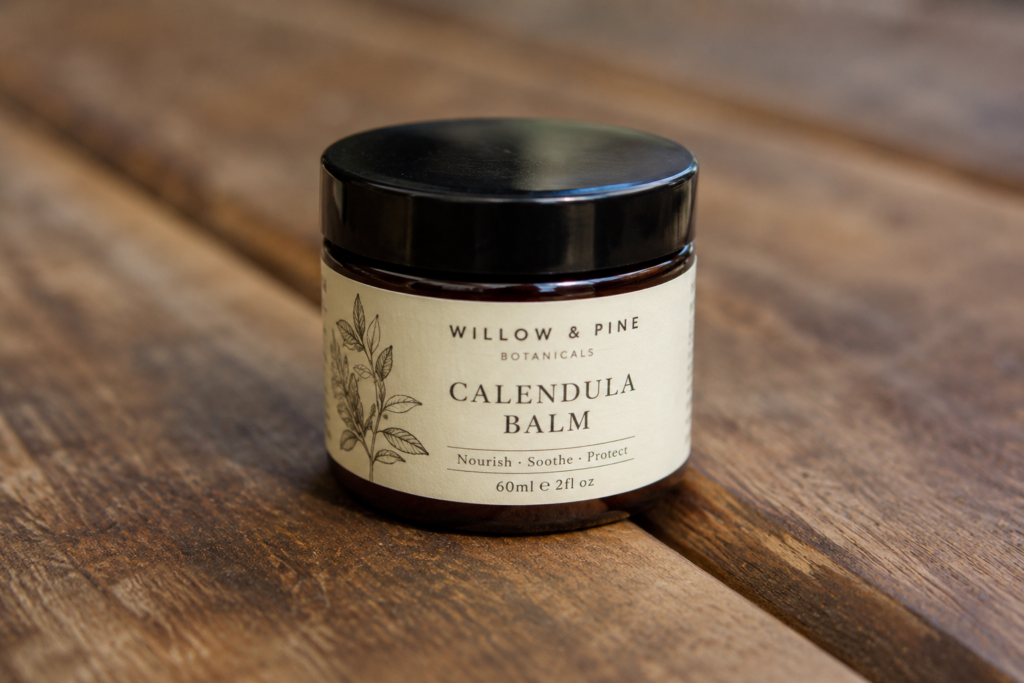
The second step is to apply the sample to the actual packaging. Not a substitute surface, not a similar material. The real thing. Adhesive performance, edge lift, surface compatibility, and the visual relationship between the label and the packaging are all things that only show up on the actual product. This step takes two minutes and is the difference between confidence and guesswork.
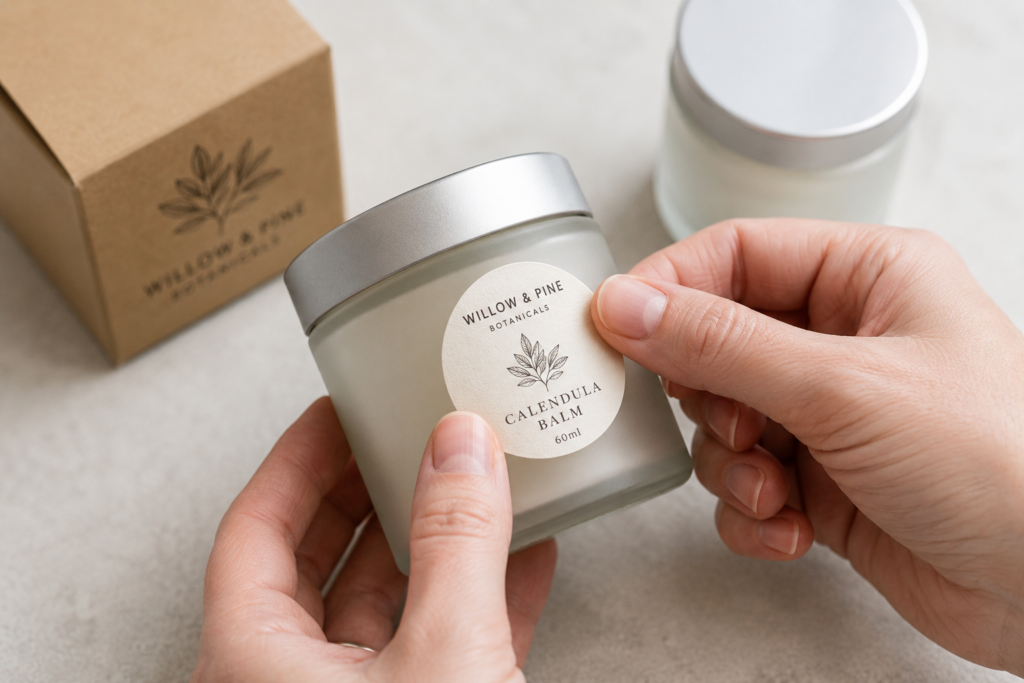
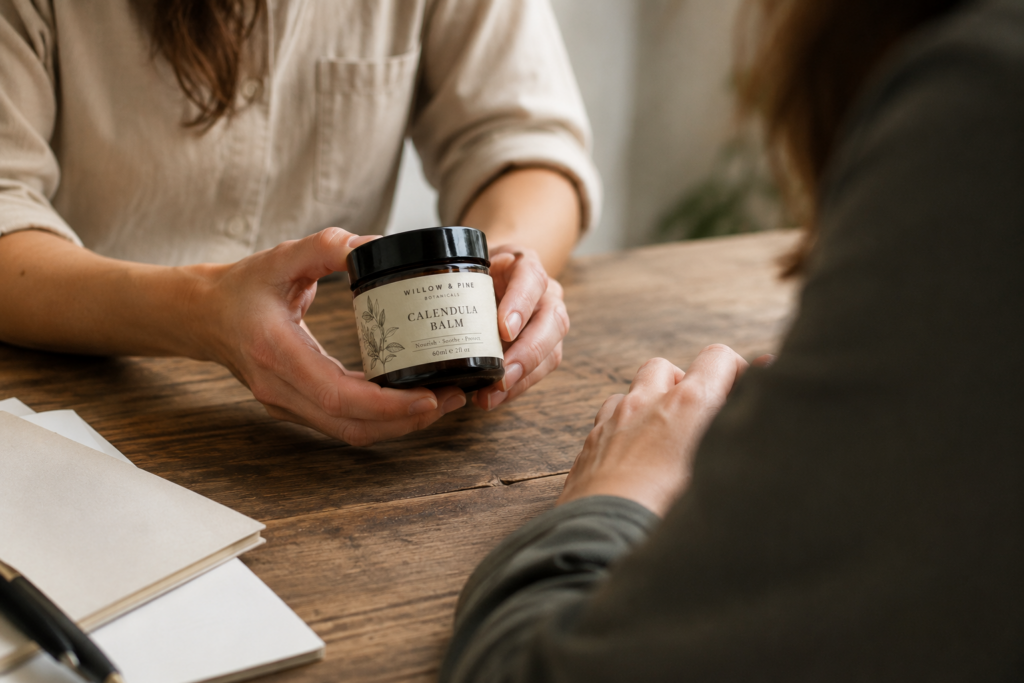
The third step is to get a second opinion from someone who has not been staring at the design for weeks. Designers and brand owners develop a kind of tunnel vision around their own work. A fresh set of eyes, ideally from someone in the target customer profile, will notice things that familiarity has made invisible. Show them the sample without context and ask what they think the product is, what it costs, and who it is for. The answers are useful information.
The fourth step is to compare two finishes if you are genuinely undecided. Most Australian printers with low minimum quantities make this practical. Ordering a short run in both gloss and matte costs a fraction of what a full quantity order in the wrong finish costs, and the comparison removes the ambiguity that screen-based decision making leaves behind.
What a sample pack says about the printer
There is a version of this conversation that is purely about the buyer’s process. There is another version that is about what a printer’s willingness to offer samples communicates about the product itself.
A printer that offers a sample pack is not doing the buyer a favour. They are making a statement about the quality of what they print. Offering samples is an invitation to scrutinise the product before committing to it. It presupposes that the scrutiny will hold up. For first-time buyers navigating a market full of online printers with varying standards, that kind of confidence from a supplier is meaningful information.
OzStickerPrinting offers a sticker sample pack for exactly this reason. It is the clearest way to demonstrate that the materials, the print quality, and the finish options perform as described, without asking a buyer to take that on faith. For Australian brands placing a first order or evaluating a new material before scaling a run, the sample pack is the starting point that removes the largest variable from the decision.
Final Thoughts
The sample run is not a sign of uncertainty. It is what informed buyers do before committing. Whether you are ordering custom stickers or labels for the first time or for a new product line, the difference between a sample pack and a full order is the difference between knowing and guessing.
The stakes are higher than they look. A label is not decoration. It is the physical interface between a brand and the person holding the product. Getting it right is worth the extra step. For Australian brands ready to test before they commit, OzStickerPrinting’s sample pack is the practical place to start.